
Home of the Great Migration
Witness Africa’s most iconic wildlife spectacle across endless golden plains.
Incredible Serengeti National Park
Serengeti National Park, meaning “endless plains” in the Maasai language, is one of the world’s most iconic safari destinations. Tanzania’s oldest national park and a UNESCO World Heritage Site, the Serengeti is celebrated for its sweeping savannahs, dramatic horizons, and unmatched wildlife diversity. It is the legendary stage for the Great Wildebeest Migration, where over 1.5 million wildebeest, 250,000 zebras, and 300,000 gazelles cross the plains each year in one of Earth’s greatest natural spectacles.
Covering 14,750 km², the Serengeti forms the heart of the Serengeti Mara ecosystem and sits close to Tanzania’s major northern attractions Kilimanjaro, Lake Manyara, Tarangire, and the Ngorongoro Crater with easy access to Kenya’s Maasai Mara.
Home to the Big Five, the park hosts an extraordinary range of wildlife, including 3,000 lions, 1,000 leopards, 300 cheetahs, 8,000 hyenas, and countless herbivores. Bird lovers can enjoy over 500 species, from ostrich and kori bustard to marabou stork, martial eagle, crowned crane, and colorful lovebirds.
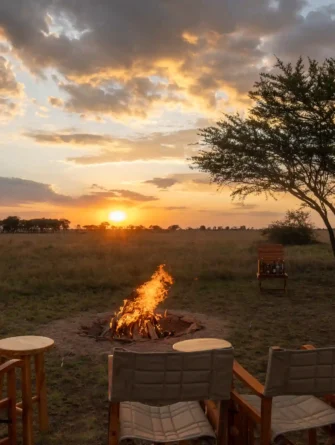
With endless horizons, golden light, and dramatic wildlife encounters, the Serengeti offers some of Africa’s most iconic photographic opportunities a dream for safari lovers and nature enthusiasts.
Great Migration Trend; Month‑by‑Month Overview
The Great Migration follows an ever‑changing pattern driven by rainfall and fresh grazing. Wildebeest and zebras instinctively move with the rains, seeking new grass and reliable water sources across the Serengeti ecosystem.
- Late November – December; The herds arrive on the short‑grass plains of Southern Serengeti and Ndutu, extending into the northern Ngorongoro Conservation Area; The plains turn green, attracting thousands of wildebeest and zebras feeding on fresh, nutrient‑rich grasses.
- January – March This is the calving season, with most wildebeest giving birth around February. The herds spread widely across Ndutu and the southern Serengeti, attracting predators and offering dramatic wildlife action.
- April As the rains shift, the herds begin moving northward, leaving Ndutu and pushing toward the central Serengeti.
- May Large columns of wildebeest move north and west of Seronera, searching for new grazing and water as they prepare for the long journey toward the Western Corridor.
- June The migration often pauses at the Grumeti River, where deep channels slow their progress. Huge herds gather in the Western Corridor, building tension before the first river crossings.
- July – August; The herds push further north, spreading across a wide front. Some move through Grumeti Reserve and Ikorongo, while others travel through the heart of Serengeti National Park toward the Mara River.
- September The migration fills the Northern Serengeti, facing the dramatic challenge of the Mara River crossings. Herds may cross north one day and return south days later unpredictable and spectacular.
- October The herds begin their southward journey, moving through Lobo and western Loliondo, returning toward the southern plains as the cycle prepares to begin again.
“However, this movement remains unpredictable, controlled entirely by nature driven by rains, water availability, and fresh pasture”.
Safari Packages




4-Day Zanzibar to Serengeti Flying Safaris
$3179 $2990

33 Days: Best of Uganda, Kenya, Tanzania & Malawi
$13570 $9970


Guest Reviews


